
Contáctanos
La mayor diferencia entre la caligrafía occidental y la oriental a la hora de plantearse un tatuaje radica en el significado. En Occidente utilizamos palabras o frases precisas, aunque la forma de escribirlas pueda variar. En Oriente, la cantidad de palabras se multiplica por cinco o resulta incluso incalculable (en japonés y chino, respectivamente). Por ello, una simple traducción de Google o mediante IA puede dar lugar a significados distintos a la idea original. ¿Nuestra solución? Consultar a un experto o a un hablante nativo; a ambos, si es posible.
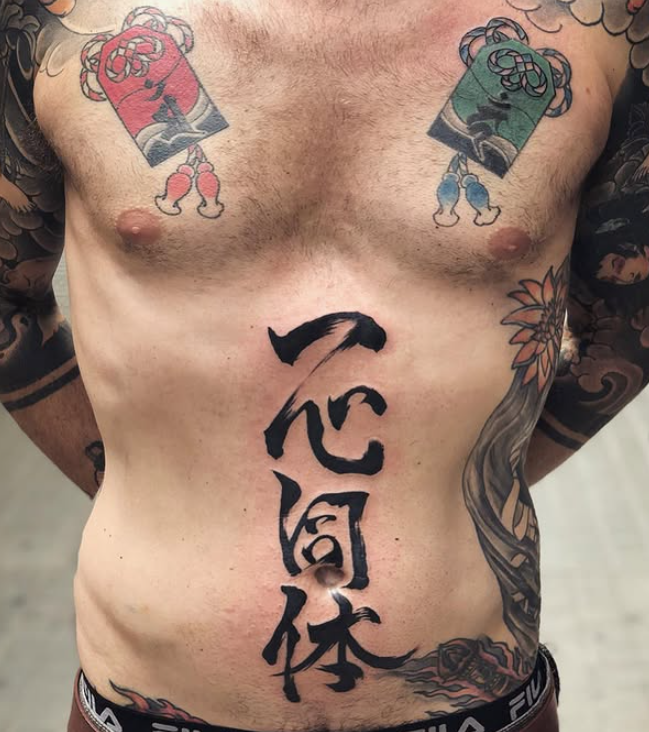
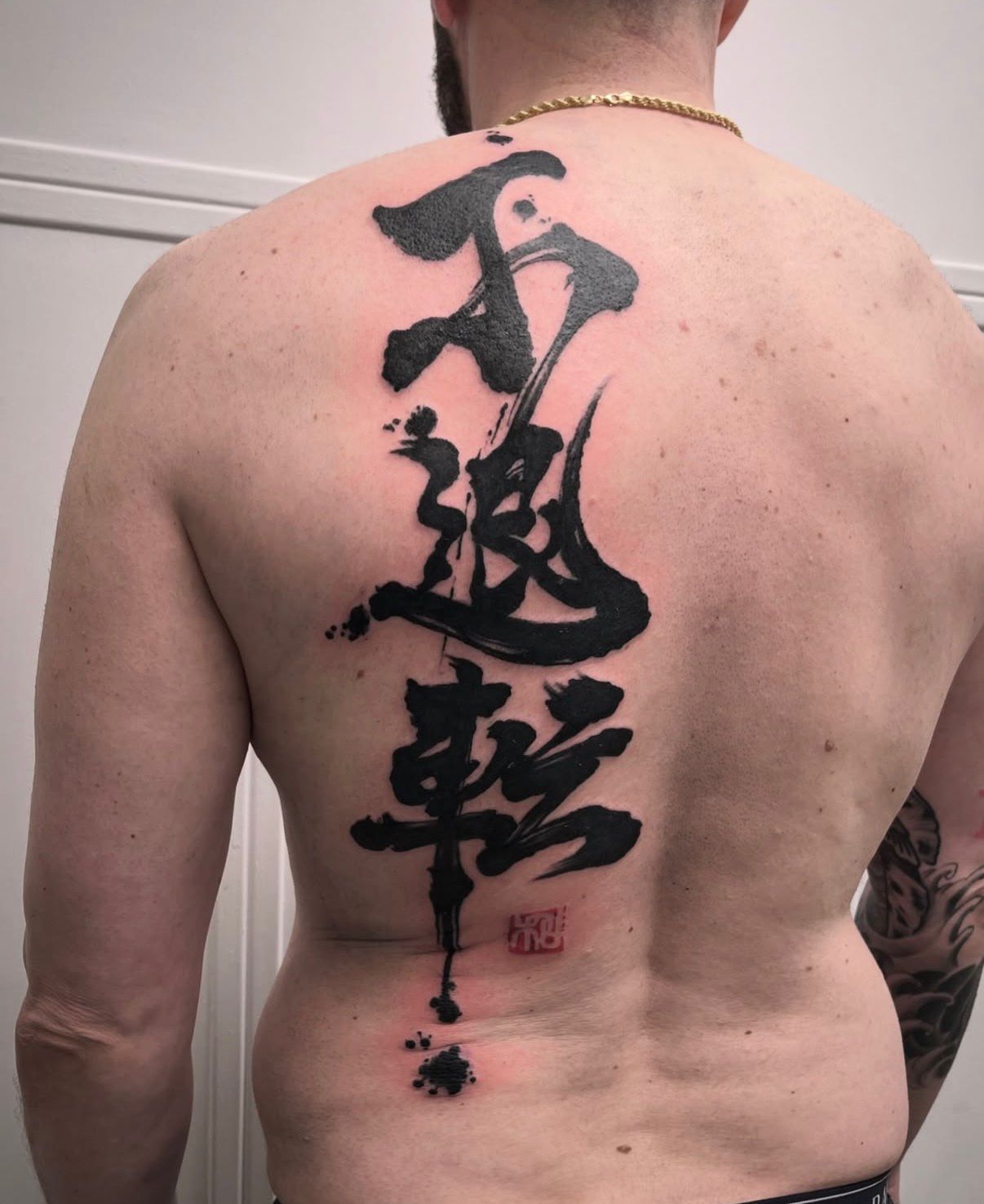
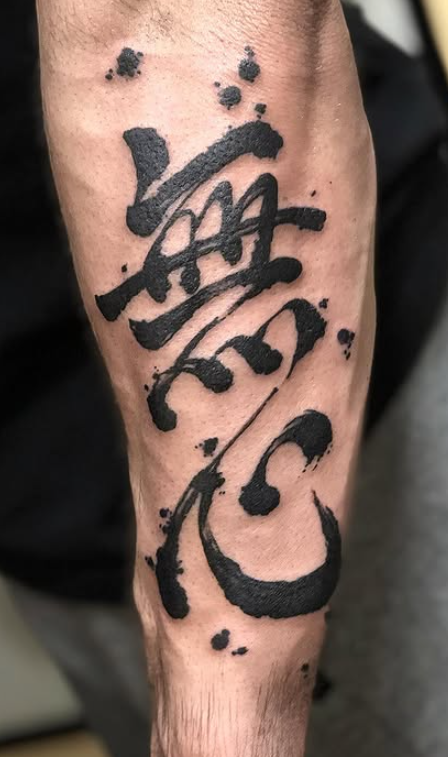
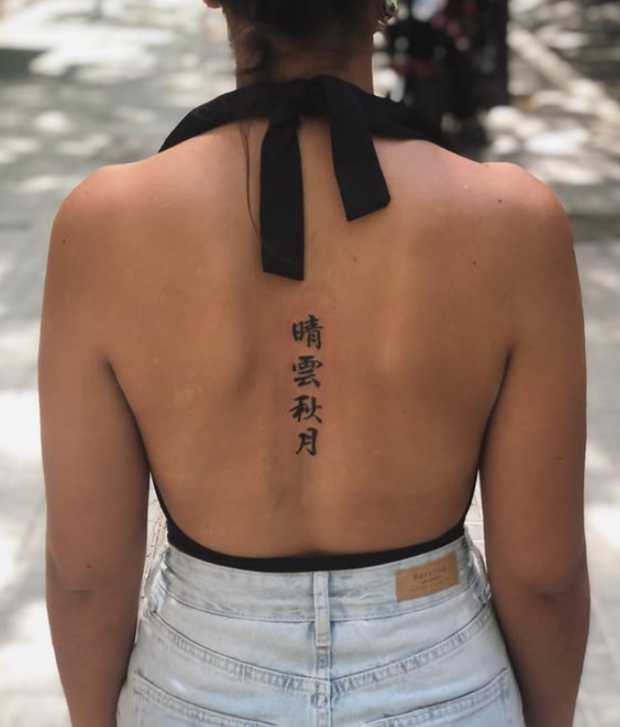
Desde el auge de las redes sociales, estamos más expuestos a la mirada ajena y, para bien o para mal, sujetos a juicios o valoraciones. Por eso, es preferible transmitir con exactitud el concepto o significado que teníamos en mente. La caligrafía japonesa es ideal para esto, ya que permite condensar o explicar frases o conceptos enteros con un solo trazo de pincel; lo maravilloso es que no se limita a un único *kanji*, pues casi siempre existe otra opción para matizar o expresar de forma distinta cada concepto. Nuestro artista residente, Sen Kawamura, destaca a la hora de encontrar y plasmar conceptos como *Isshindoutai* (dos o más personas unidas de corazón, tan cercanas entre sí que actúan como una sola), *Mushin* (ausencia de mente: estado que se alcanza al liberar la mente de pensamientos como el miedo, la ira o el ego, ya sea en combate o en la vida cotidiana) y *Seiunshuugetsu* (un corazón limpio y sereno, transparente y puro como las nubes en un cielo soleado y la luna clara de otoño). No obstante, sus posibilidades no se limitan a estos conceptos complejos, ya que también permite embellecer palabras sencillas; así de flexible es la caligrafía japonesa.
.jpeg)
.jpeg)
.jpeg)
En ONAS nos interesamos por que nuestros clientes tengan el mejor tipo de atención durante todo el proceso, por lo que estaremos encantados de responder todas tus preguntas sobre el mismo.


